
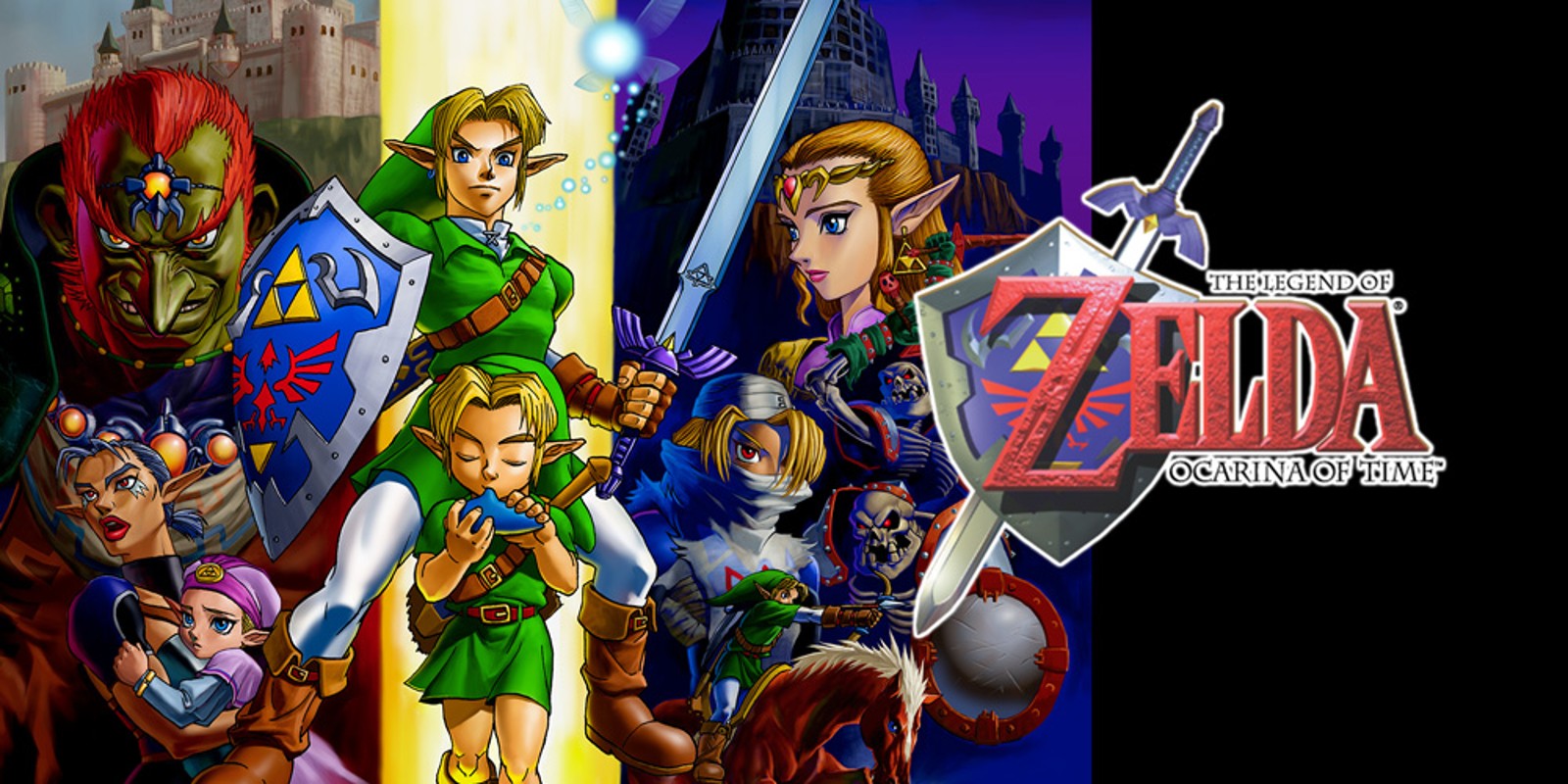

Ocarina of Time is still seen by fans as the best Zelda game ever even 30 years after its original release. In this article we will go over why Ocarina of Time is still regarded as the best Zelda Game
Ocarina of Time has earned our number one spot on our top 10 best Zelda games list and that was not only because of the nostalgia a lot of fans have for the game, but by how the game still holds up compared to modern Zelda titles. It earned its number one spot due to its lasting impact, consistent fan praise, and continued relevance within the Zelda community. From groundbreaking 3D gameplay mechanics to iconic music and world design, Ocarina of Time set high standards for all Zelda games to follow.
Why Ocarina of Time is so influential
Ocarina of Time was the introduction from 2D to 3D for the Zelda franchise, a move that was not only important for the future of the Zelda franchise, but also to the action-adventure genre as a whole. The transition to 3D for Zelda also brought solutions to new design problems that many developers hadn’t solved yet. It came at a time when many developers struggled with 3D environments, camera control, and readable combat in a 3D world. Ocarina of Time invented different solutions to these problems that are still visible in modern game design today.
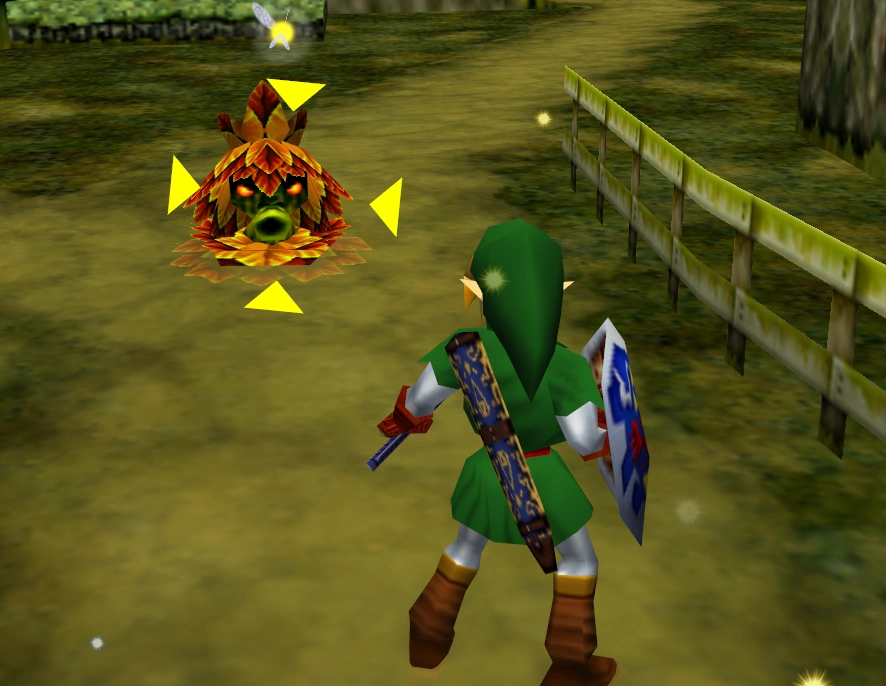
The 3D version came with mechanics that game developers still use to this date. Z-targeting is a revolutionary lock-on system that uses the Z button to focus the camera on the enemy that Link is attacking. In this way players would always face the enemy when attacking, leading to strategic combat and easy projectile aiming. This new system solved a large part of camera and control issues while fighting in 3D action-adventure games. Many 3D action-adventure games releasing to this date still use a lock-on system for players to use while fighting.
Another revolutionary game-design point of Ocarina of Time was the large Open World. It may not be considered fully open by today’s modern gaming standards, the sense of scale and freedom it offered at the time was unprecedented. Hyrule Field served as a central hub connecting all the different areas the player could discover, encouraging exploration while still naturally playing through the story. Many fans praised Ocarina of Time for the beauty of the world and the true magical fairytale feelings players got from the different areas.
The balance between freedom and structure became a blueprint for future Zelda titles and influenced how open worlds are designed in modern games to this day.
The most memorable elements in Ocarina of Time
Ocarina of Time is also remembered for the excellent combination of gameplay, story, and atmosphere into a cohesive experience. Ocarina of Time has one of the most memorable soundtrack in the series, an iconic story, the well-designed dungeons, and a fairytale like world.
The soundtrack of Ocarina of Time was composed by Koji Kondo and features some of the most iconic Zelda songs like Zelda’s Lullaby, Gerudo Valley, and Saria’s Song, and Song of Storms. Rather than serving just as background music, the soundtrack plays a crucial part in world building. The composer masterfully blendedcatchy with deep atmospheric storytelling, creating emotional links to locations like the Haunting Shadow Temple, and using diverse musical styles to distinct the different areas and cultures in the game like Gerudo area and Zora area, making the music in the game very memorable.
Another great musical element in Ocarina of Time is playing of the Ocarina to solve puzzles, and trigger events. This made the tunes of the Ocarina a core part of the adventure and made the different musical tunes unforgettable. The combination of sound and gameplay also demonstrated how audio design could influence player interaction, an idea that is still seen in future games.
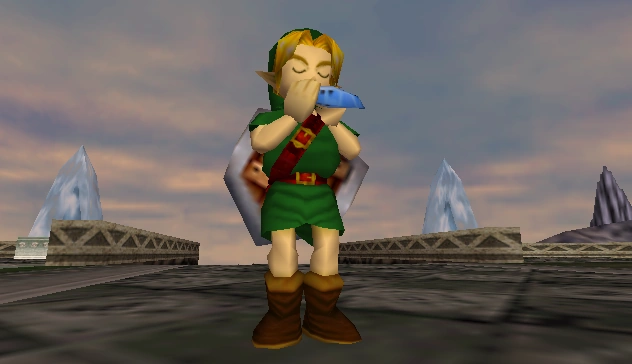
Ocarina of Time also featured some of the most iconic story moments in the whole Zelda franchise. The game featured a new time travel mechanic where you could travel time from a younger version of Link to an adult. This mechanic was unique to Ocarina of Time and was praised for bringing a lot of emotional depth to the story.
The most special moment for fans was after Link pulled the master sword and travels to a future where Ganondorf took over Hyrule, a future where a lot is destroyed and now in ruins. The moment where the player sees a thriving town now destroyed in the future, is seen as one of the most memorable and sad moments in the series.
Another moment still talked about by fans is the first time you enter Hyrule Fields. After the intro of the game in Kokiri Forest the player is presented to the main large hub area of the game, Hyrule Fields, that connects all other places in the game. Players describe entering Hyrule Fields for the first time felt magical, vast and adventurous, a true ‘world-opening’ moment. Players were in awe for it being a large 3D space to explore, and the excitement ahead, never seen before in a Zelda game.
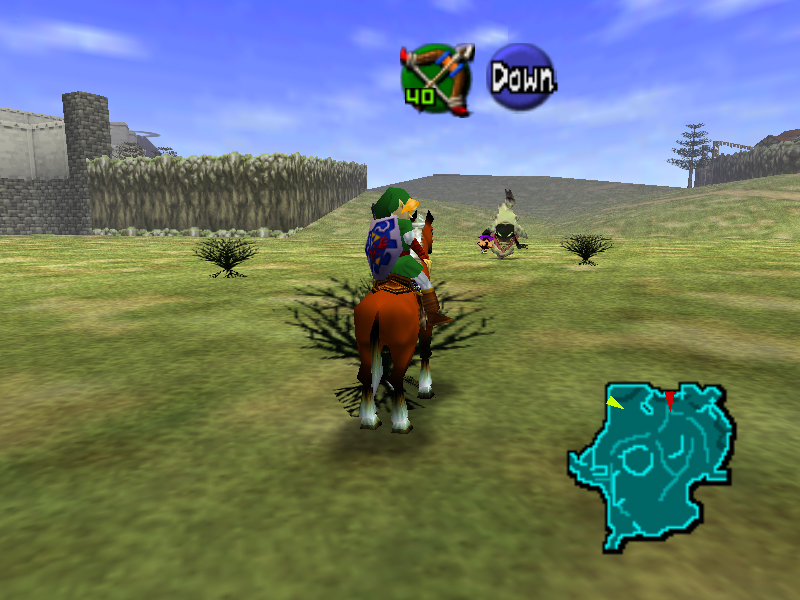
Also praised by fans are the challenging dungeons Link has to overcome filled with enemies and puzzles now for the first time in 3D. The dungeons contained seamless integration with the world around it, unique gimmicks, a strong atmosphere enhanced by the music, and clever puzzles utilizing the now 3D space. The dungeons felt perfectly integrated in the world, unlike other Zelda games where they felt like separate levels. Because of these reasons the dungeons still feel very memorable and still seen as the best dungeons in the whole series.
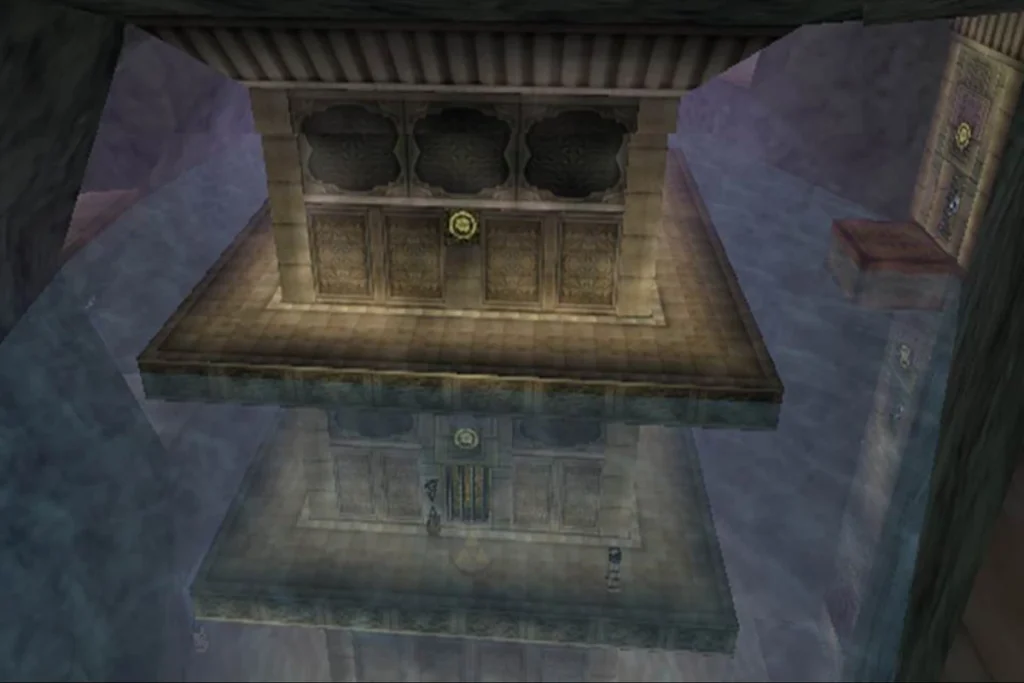
One prime example of a great dungeon in the game is the Water Temple. The Water Temple is a notoriously challenging dungeon located in Lake Hylia. The dungeon is famous for its clever use of water by the main gimmick of the temple being manipulating water levels. Its also praised for its ambitious non-linear design, great atmosphere, and unique use of items (Hookshot, Iron Boots).
The community and nostalgia of Ocarina of Time
Nostalgia plays a significant role in how Ocarina of Time is remembered. This is especially true for players who experienced and loved the game during their childhood. For many, it was their first Zelda game or even their first 3D adventure, making Ocarina of Time a generational experience.
However, nostalgia is not the only reason why the game is still so popular to this date. Ocarina of Time legacy continues to be discussed online, ranked, and getting new content in the form of mods fans created for the game. It also attracts new players through re-releases on Nintendo Switch Online, and the 3D remake on the Nintendo 3DS, while long-time fans actively revisit the game for its design, gameplay, and legacy, also encouraging new fans to try the classic and see how Ocarina of Time still holds up.
The ongoing community engagement keeps Ocarina of Time relevant, ensuring that the game is not only remembered fondly, but continuously recalled in the modern gaming scene.
Modern criticism on Ocarina of Time
Despite the legendary status of Ocarina of Time, the game is not without criticism. For example, players criticize the game for outdated controls like the camera system, and targeting that can feel dated compared to modern action-adventure games.
The pacing of the game is also frequently mentioned because of certain sections feeling slower compared to more modern games and later entries in the Zelda franchise. Large areas in the game like Hyrule Fields also lost their scale for a lot of people, with the world now feeling small and empty compared to later Zelda games like the Windwaker and Breath of the Wild and more modern open world games.
However, much of the criticism comes from Ocarina of Time being the first 3D Zelda game and how the future games evolved from its flaws. Many systems that now feel outdated were groundbreaking for its time and laid foundations for future games to come.
In conclusion
Ocarina of Time is still regarded as the best Zelda game not because its flawless, but because it changed the Zelda series and modern action-adventure games forever. From the perfect transition to 3D and revolutionary new mechanics like Z-targeting, influential world design, storytelling, music, and the most memorable moments in the franchise. With the large community support the game still is relevant and attracts new players to try the classic. Modern criticism argues that the game is outdated but it laid the groundwork for all future Zelda entries to follow. That is why that almost 30 years later Ocarina of Time is still seen as the benchmark of the series.



Leave a Reply